Mobile connectivity roll-out challenges – planning, investment, and awareness
25 April 2024
Share:
As part of our latest research series Connecting today for tomorrow we have been talking to experts across the sector about the importance of digital connectivity starting with Gareth Elliott, head of policy and communications at Mobile UK.
A quick-fire first round question Gareth, how many connected devices do you own?
Just in the room where I am currently sitting, I can count seven connected devices, including a connected adaptor plug, a mobile phone, a tablet, a connected speaker and a fitbit! If I’d been chatting to you 10 years ago when Mobile UK was first founded, this would have been two or three. It shows the massive growth in connectivity since then.
Our research on connectivity found that people are actually much more connected than they think they are – around 80% of those who took part in our ‘how connected are you?’ campaign had many more devices than they initially thought when they stopped and thought about it.
Why is mobile connectivity important?
Connectivity now underpins everything we do in a modern society – ranging from digital transformation in local authorities to tackling climate change and tracking the impact of net zero initiatives.
Think about the efficiencies in manufacturing due to automation, or wireless payments on 21st century high streets, or agri-tech to name just a few – all powered by mobile connectivity. Mobile data usage is rising by 40% a year, and as we move into the future the biggest users of mobile connectivity won’t be phones, but will be machines talking to machines in the Internet of Things (IoT). At the moment there are 15 billion connected devices worldwide, and this is expected to double to 30 billion by 2030.
What are the three main challenges to the roll-out of mobile connectivity?
1. Planning: The planning system currently makes it quite challenging and time-consuming to gain permission for masts which are placed where we can obtain best coverage for all users
2. The investment environment – we need to balance the requirements on MNOs so we can invest more in rolling out mobile connectivity?
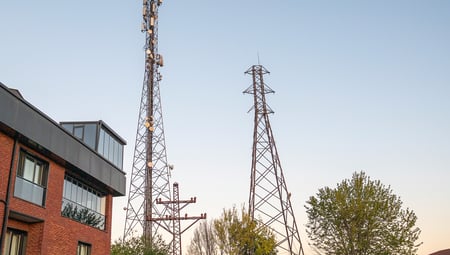
3. Awareness and understanding around the physical infrastructure that supports mobile connectivity, and the need for it. There is a physical network which supports the invisible signal that people only really think about when their phone doesn’t work!
What’s the key takeaway for those wanting to improve connectivity?
Understand the economic benefits on offer if we improve connectivity and think about the infrastructure needed to deliver it.
Gareth Elliott is head of policy and communications at Mobile UK. Mobile UK is the trade association of the UK’s mobile network operators, EE, Virgin Media O2, Three and Vodafone. Its mission is to work with Government, regulators, civil society, and others to harness the power of mobile to improve the lives of customers and the prosperity of the UK as a whole.