
Commercial Quarterly Examiner – retail market update Q2 2026
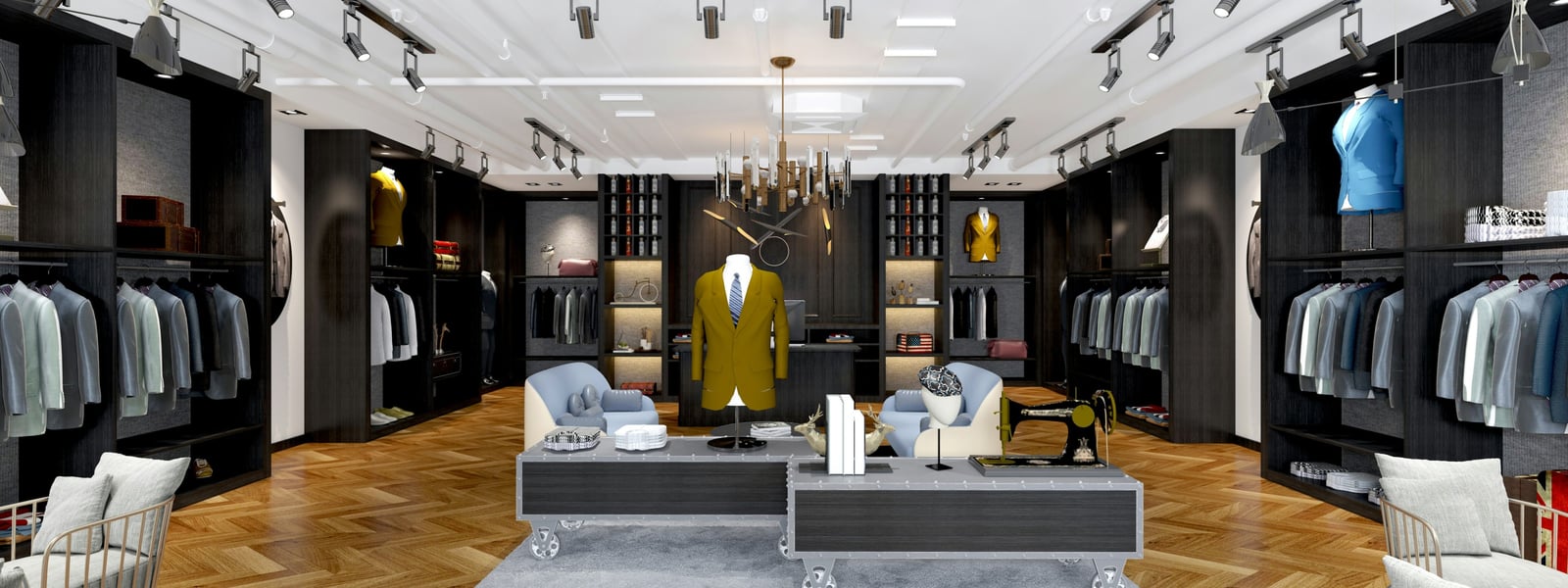
The hot weather and the football World Cup supported food, drink, electrical and seasonal purchases in July, according to the BRC Retail Sales Monitor.
The data also signalled that spending shifted online as consumers sought to avoid the head outdoors, with electric fans and paddling pools selling very well!
All retail sales increased by 1.9% year on year in June, against a growth of 3.1% in June 2025, matching the 12-month average rate of growth. In-Store Non-Food sales decreased by 1.1% year on year in June, against growth of 2.2% in June 2025. Online Non-Food sales increased by 5.1% year on year in June, against growth of 2.3% in June 2025. This was above the 12-month average growth of 1.5%. The online penetration rate (the proportion of Non-Food items bought online) increased to 39.0% in June from 37.7% in June 2025.
Next’s August trading statement reported strong performance. Full-price sales increased 9.2% year-on-year in the 13 weeks to 1 August, against management’s forecast of just 4.0%, leaving sales £70m ahead of expectations. UK sales increased 2.8%, but the standout was international online sales, up 36.9%. Within the UK, online sales rose 5.0%, whereas store sales slipped 0.3%.
John Lewis is seeking to position itself at the forefront of AI-enabled retailing by integrating its product catalogue with platforms including ChatGPT and Google Gemini. Products can be discovered through conversational search and, ultimately, purchased through AI applications. The initiative forms part of the Partnership’s £800m transformation programme and reflects a potentially significant shift in online retail, with AI assistants emerging as an additional sales channel in addition to retailers’ own websites, search engines and social media.
Occupational view
- The wider retail market is seeing weaker take-up and easing rental pressure, with annual retail take-up down sharply and more space available in weaker locations, although prime Central London continues to outperform with strong leasing demand and rental growth.
- Retail parks remain the strongest occupational segment, supported by falling availability, limited new supply and rapid reoccupation of former Homebase and Carpetright units by retailers such as B&M, Next, Superdrug, Aldi and M&S.
In June annual take up of all retail space was -16% lower than a quarter earlier and -45% lower compared to the same quarter last year. Net absorption rates for Shops and Retail Parks continue in positive territory but Shopping Centre net absorption rates have been negative since the end of 2019. A negative reading indicates that more space is being released onto the market than is being let.
The amount of all UK retail space available to let decreased by -4.8% y-on-y in Q2. Over this 12 month period Retail Park availability has decreased by -27%. The Retail Park development pipeline has been delivering just 170,000 sf per quarter post pandemic but occupiers have been leasing an average of 987,000 sf each quarter over this same period.
The rapid recycling of space released by the failures of Homebase and Carpetright demonstrates the strength and breadth of retail-park occupier demand. Former Homebase stores have been particularly attractive to expanding value retailers, with B&M taking large units in locations including Bridgend, Stamford, Berwick, Portishead, Telford and Chatham. Carpetright’s generally smaller units have attracted an even wider range of operators: Next has taken former stores at Reading Gate and Ruislip, Superdrug has expanded into former Carpetright units in Aberdeen and Linwood, while Aldi is converting former Carpetright and Argos space at Rayleigh. The speed and diversity of reoccupation highlights both the shortage of suitable retail-warehouse space and the continuing evolution of retail parks from bulky-goods locations into mainstream shopping destinations.
Retail-park demand is broadening well beyond its traditional bulky-goods and value-retail base. M&S is accelerating the rotation of its estate towards larger, more productive out-of-town locations, including the conversion of 12 former Homebase stores into Foodhalls, while Next continues to favour larger destination formats capable of combining fashion, home and third-party brands. The trend is helping transform the strongest retail parks into mainstream shopping destinations and is increasing competition for larger, well-configured units.
John Lewis is following a separate path and investing £50m this year across five stores as part of a long-term programme to transform and elevate all 36 stores across its estate into retail destinations. Customers in Glasgow, Cambridge, Leicester, Reading, and Liverpool will benefit from this latest phase of investment. Glasgow will receive more than £20m in a full redevelopment – the largest single-store investment made by the brand in recent years. The Glasgow redevelopment will see every floor of the 28,000 square metre store upgraded.
All Shopping Centre market rental value (MRV) growth decreased to 2.9% in the year to June from 3.5% y-on-y in Q1. Retail Park rental growth increased to 2.9% in the 12-months to June from 2.7% y-on-y in December last. SE and RUK shop rental values grew at 1.1% and 1.8% y-on-y respectively.
In Central London shop MSCI recorded MRV growth of 6.9% y-on-y in June. Leasing activity at Shaftesbury Capital remained exceptionally strong during H1 2026, providing further evidence of the resilience of London’s prime West End. The company completed 226 leasing transactions. New leases and renewals were agreed at rents 18% above previous passing levels and 5% ahead of estimated rental values. Strong demand from luxury retailers, international fashion brands, restaurants and leisure operators, together with limited new supply, continues to support rental growth.
Investment view
- Retail investment performance has softened and transaction activity has reduced, with returns easing across shopping centres, retail parks and high street shops, and all-retail investment volumes falling in Q1.
- Prime and specialist retail assets continue to attract capital, helped by relatively high yields and investor confidence in quality stock, as shown by Frasers Group’s £400m acquisition of York Designer Outlet and East Midlands Designer Outlet.
Performance from the Retail Sector fell across each of the three main segments in Q2. However, Retail continues to perform strongly relative to the All-Property average. Shopping Centre total returns decreased to 8.2% y-on-y in Q2 from 8.4% in March. Retail Park total returns slipped to 7.7% y-on-y in June from 7.3% in September. High Street shop performance fell back in Q2 as total returns decreased to 7.7% from 8.1% in Q1.
The indices suggest that retail yields in each of the main segments softened in Q2 as market conditions worsened. However, a 12-month view shows that strengthening values have resulted in yields hardening, particularly for Shops and Shopping Centres.
Retail Park investment volumes decreased y-on-y in Q1 by -19.3% to £1.491 billion in 260 transactions or, £1.486 billion in current value terms, from £1.849 billion (£1.837 billion) in 270 transactions in Q4 2025. Shopping Centre investment volumes increased y-on-y in Q1 by 21.8% to £4.311 billion in 113 transactions or, £1.739 billion in current value terms, from £3.538 billion (£1.426 billion) in 110 transactions in Q4 2025. Investment in traditional high street shops continues to decrease q-on-q. Preliminary estimates indicate that All Retail investment volumes decreased by -7.6% to £4.246 billion (£8.126 billion) in 5,681 transactions in Q1.
Frasers Group Plc strengthened its position as one of the UK’s largest retail property owners in Q2 through the acquisition of York Designer Outlet and East Midlands Designer Outlet from Aviva Investors for around £400 million. The two dominant regional outlet centres comprise approximately 640,000 sf of retail accommodation and over 170 stores, occupied by leading premium and lifestyle brands including Nike, Ralph Lauren, Calvin Klein, Tommy Hilfiger, M&S and Next. The acquisitions reflect Frasers’ strategy of building a portfolio of destination retail assets that combine resilient rental income with opportunities to expand its own retail brands, while highlighting continued investor confidence in the outlet-centre sector.
Frasers Group is a FTSE 100 retail and property company with annual revenues exceeding £5 billion. Originally established as Sports Direct, it now owns a portfolio of sports, premium fashion and luxury retail brands while also becoming one of the UK’s most significant owners of shopping centres, retail parks and outlet villages. Its strategy combines retail operations with direct ownership of commercial real estate, enabling it to generate rental income, enhance the trading environment for its own brands and create long-term capital value.
1 Investment volumes are the quarterly value of investment transactions adjusted for capital growth over the analysis period and provide a measure of transaction activity that is not obscured by changes in value.
The information provided in this report is the sole property of Cluttons LLP and provides basic information and not legal advice. It must not be copied, reproduced or transmitted in any form or by any means, either in whole or in part, without the prior written consent of Cluttons LLP. The information contained in this report has been obtained from sources generally regarded to be reliable. However, no representation is made, or warranty given, in respect of the accuracy of this information. Cluttons LLP does not accept any liability in negligence or otherwise for any loss or damage suffered by any party resulting from reliance on this publication.
Philip Cazenove
Partner, valuation & advisory – head of London commercial
Head office
T +44 (0) 7894 608 075

Richard Moss
Partner, valuation & advisory – head of commercial UK funds
Head office
T +44 (0) 20 7647 7226


Sign up to receive our research
Register here if you would like to receive our research direct to your inbox.
Cluttons produce quarterly research on both the residential and commercial markets. We also produce an annual report on the importance of digital connectivity and the infrastructure needed to provide it.