
UK & London rental market update Spring 2024

Demand in the UK rental market hit new highs in 2022 and early 2023. It is now moderating, but is still higher than pre-pandemic averages.
Highlights
- Rental demand easing from record highs, and supply starting to rise
- Rental growth expected again this year, but at a lower rate than 2022 and 2023
- Cluttons forecasts +2.5% rental growth in prime London this year
| Year | UK House Prices | Prime London Prices | Prime London Rents |
|---|---|---|---|
| 2023 | -2.3% | -1.1% | +4.4% |
| 2024 | +1.0% | +0.0% | +2.5% |
| 2025 | +4.0% | +3.5% | +3.0% |
UK rental market
Demand in the UK rental market hit new highs in 2022 and early 2023, and is now moderating, but is still higher than pre-pandemic averages. Supply of rental properties, which has been very constrained, is beginning to loosen slightly – although the overall lack of supply remains a key factor in the market. However, the supply/demand imbalance is beginning to narrow, and this means that the very strong rental growth registered in recent years will not be continued. Affordability is also playing a part in slowing rental growth, with more evidence that rental properties have hit their rent ceiling. As wage growth slows into 2024, affordability concerns will continue to put downward pressure on rental growth.
New data from Zoopla shows that the number of rental properties where the asking rent is being cut by 5% or more has risen to the highest level in at least five years.
The official rental data from the ONS, which includes new lets agreed as well as continued tenancies, shows how rental growth is now plateauing, rather than continuing to climb.
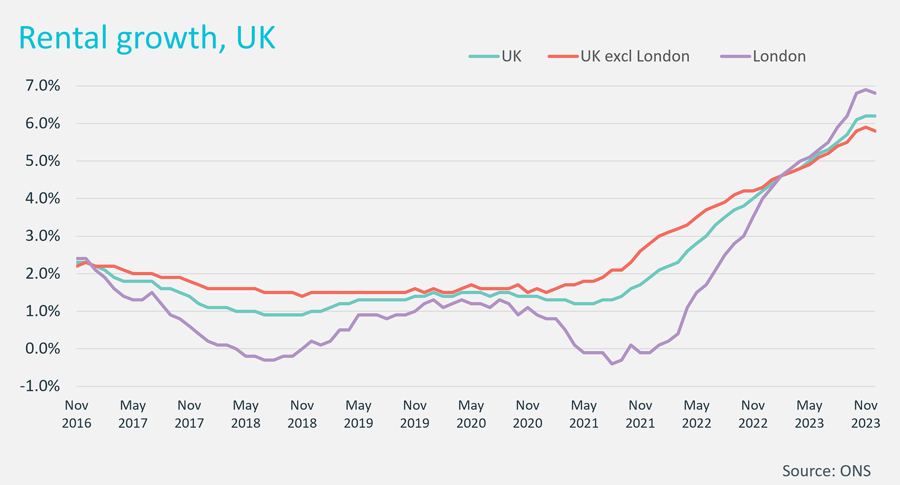
When it comes to new lets being agreed, the latest data from Zoopla shows that rental increases are still in double digits in most regions, but this still marks a slowdown from a year ago, and these rental rises will slow further during 2024.

London & Prime London rental market
Just as rental growth is easing across the UK market, so too it is slowing across the London and prime London markets. Official data signals that rental growth peaked at 6.9% in November, falling to 6.8% in December in the London market.
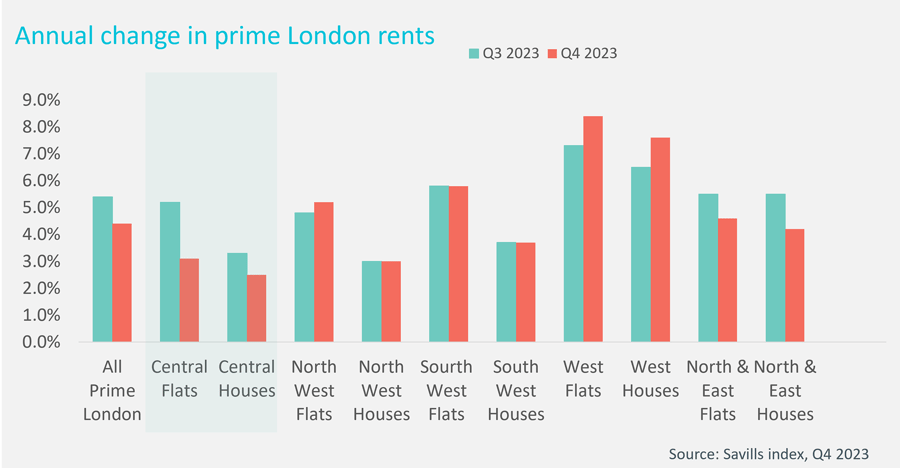
In prime London, rental growth peaked in September 2022, and the annual rate of growth has been easing since then, to 4.4% in Q4 2023. On a monthly basis, prime rents fell in December, the first monthly decline since March 2021 when the central London rental market slumped during consecutive lockdowns. For context however, average prime London rents are 17% higher than they were at the start of the pandemic (March 2020).

More detailed data shows that smaller flats are registering higher rental growth than houses, reflecting the larger demand pools for properties with lower headline rents. It may also be a reflection of rising supply in houses – especially where potential vendors are looking to rent out their property while they wait for the sales market to pick up momentum. Agents report an increasing trend of vendors looking to value their property for sale and rental. As the sales market recovers this year and next, some of these properties may again leave the rental market.
As outlined in our forecasts, rents will continue to rise in the prime London market this year, but at a more modest rate than the last two years.
The information provided in this report is the sole property of Cluttons LLP and provides basic information and not legal advice. It must not be copied, reproduced or transmitted in any form or by any means, either in whole or in part, without the prior written consent of Cluttons LLP. The information contained in this report has been obtained from sources generally regarded to be reliable. However, no representation is made, or warranty given, in respect of the accuracy of this information. Cluttons LLP does not accept any liability in negligence or otherwise for any loss or damage suffered by any party resulting from reliance on this publication.